Every Home Has a Story. The Next Chapter Begins When You're Ready.For many homeowners, selling the family home is one of the most emotional decisions they'll ever make.This isn't just a piece of

Dated: August 7 2026
Views: 13
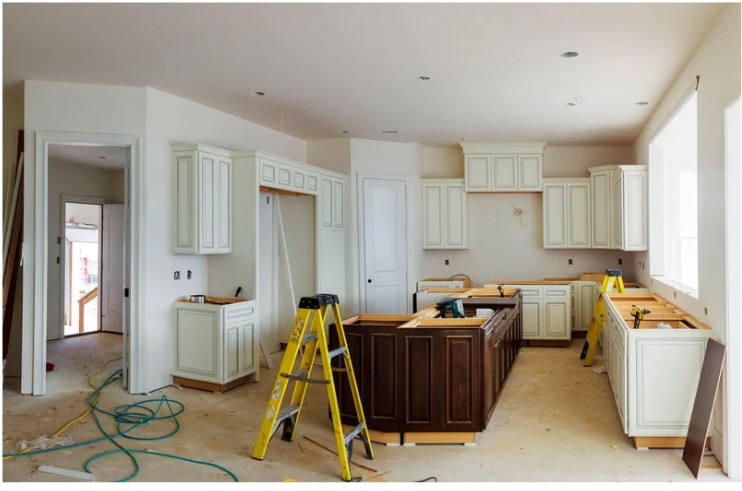
If you've lived in your home for 20 or 30 years, chances are you've thought about remodeling.
Maybe the kitchen feels dated.
The bathrooms haven't been updated in years.
The flooring has seen better days.
The paint colors reflect a different decade.
And now you're wondering:
"Should we remodel before we sell—or should we just sell it as it is?"
It's an important question.
Because when you're preparing to leave a home, the goal isn't to create your dream house.
The goal is to prepare the home for the next owner while protecting your equity.
And those are two very different things.
If you were staying another 10 years, a major renovation might make perfect sense.
But if you're planning to sell in the next year or two, the calculation changes.
You need to ask:
"Will this improvement help us sell, or are we simply spending money because we don't like the way the house looks anymore?"
A homeowner might spend $50,000 remodeling a kitchen because they personally want a beautiful new kitchen.
But if they're moving six months later, they may never enjoy the investment.
That's why it's important to separate living improvements from selling improvements.
Before spending money, put potential projects into three categories.
These are problems that could negatively affect the sale.
Examples:
Roof leaks
Plumbing problems
Electrical issues
Broken HVAC
Water damage
Safety concerns
Major deferred maintenance
These issues may need to be addressed because buyers—and their inspectors—will notice them.
These improvements can make the home more appealing but aren't necessarily required.
Examples:
Fresh interior paint
New light fixtures
Updated landscaping
Replacing worn carpet
Deep cleaning
Improving curb appeal
These projects often provide a better balance between cost and impact.
These are projects that can become expensive very quickly without providing a proportional return.
Examples might include:
Completely redesigning the kitchen
Adding expensive custom cabinetry
Installing luxury finishes
Building an elaborate outdoor kitchen
Adding rooms, you don't personally need
Making highly personalized design choices
Before tackling a major project, get professional advice about whether buyers in your market will actually pay more for it.
The kitchen is often the first room homeowners think about remodeling.
But should you?
Not necessarily.
If your kitchen is functional but dated, you may not need a complete renovation.
Instead, consider lower-cost improvements such as:
Fresh paint
Updated hardware
New lighting
Professional cleaning
Minor cabinet repairs
Decluttering countertops
A clean, functional kitchen can often show much better than a homeowner expects.
If the kitchen has major functional or condition issues, however, the conversation changes.
The important thing is to determine what buyers will notice and what the market expects before spending tens of thousands of dollars.
Bathrooms can be similar.
You don't necessarily need to install a luxury spa bathroom before selling.
Instead, consider:
Replacing damaged fixtures
Fresh caulking
Updating lighting
Cleaning grout
Replacing worn flooring
Fresh paint
Repairing anything that doesn't function properly
Again, the goal is not to create your dream bathroom.
It's to present a home that feels clean, cared for, and move-in ready.
Paint is one of the simplest ways to change how buyers perceive a home.
After decades in one house, walls can show:
Scuffs
Fading
Nail holes
Wear
Outdated colors
A fresh coat of neutral paint can make rooms feel:
Cleaner
Brighter
Larger
More current
And compared with a major remodel, it's relatively inexpensive.
Flooring receives a surprising amount of attention during showings.
If your floors are:
Severely worn
Stained
Damaged
Mismatched
they may make the entire home feel older.
Depending on the condition, options may include:
Professional cleaning
Refinishing hardwood
Repairing damaged areas
Replacing worn carpet
You don't necessarily need the most expensive flooring.
You need flooring that presents well.
First impressions matter.
Before buyers ever walk through your front door, they're evaluating the exterior.
Look at:
Landscaping
Front door
House numbers
Walkways
Driveway
Exterior lighting
Porch
Shrubs and trees
Lawn
Simple improvements can make a significant difference.
Sometimes fresh mulch, trimmed landscaping, a clean entryway, and a welcoming front door can do more than an expensive renovation.
One of the most expensive mistakes homeowners make is starting a renovation before determining what actually needs to be done.
The better approach is:
Are you selling in:
3 months?
1 year?
3 years?
5 years?
The longer you plan to stay, the more a remodel may make sense for your own enjoyment.
Identify:
Condition issues
Outdated areas
Safety concerns
Buyer objections
How does your home compare with other homes buyers will consider?
Focus your money on improvements most likely to matter.
Don't allow pre-sale improvements to consume the equity you're hoping to create.
This is perhaps the most important rule:
A $30,000 renovation doesn't automatically add $30,000 to your home's value.
The return on an improvement depends on:
Location
Price range
Buyer expectations
Current market conditions
Quality of the work
Comparable homes
The home's existing condition
Before spending significant money, understand the likely financial return.
Selling your home as-is can sometimes be the right strategy.
This may make sense when:
The home needs significant updating.
You don't want to invest more money.
You don't have the time or energy for renovations.
You're targeting buyers willing to renovate.
Your property has other characteristics that create strong demand.
There isn't one correct selling strategy.
The right strategy depends on your home, your market, your timeline, and your goals.
Instead of asking:
"Should we remodel?"
Ask:
"What improvements, if any, will give us the best return for the money, time, and effort we invest?"
That is a much better question.
It shifts the conversation from emotion to strategy.
Before approving any project, ask five questions:
If buyers won't notice it, it may not be worth doing.
If it fixes a significant problem, it may be important.
Get realistic estimates.
Don't assume. Research it.
If the answer is no, be especially careful about spending the money.
This is where the decision can become especially complicated.
After three decades, you may see every outdated feature.
Buyers may not see the same things.
You may think:
"Everything needs to be remodeled."
A buyer may think:
"This home has great bones, a fantastic lot, and a location we love."
Don't automatically assume your home needs a complete transformation.
Sometimes strategic preparation is much more effective than a full renovation.
Your goal is to leave it Market Ready.
There's a difference.
You want buyers to see:
A well-maintained home
A clean home
A cared-for home
A home with manageable projects
A property they can imagine making their own
You don't necessarily need to make every decision for them.
Sometimes the best strategy is to let the next homeowner create their own vision.
If you're selling because you're downsizing, preparing for retirement, or moving closer to family, every dollar you invest in the current home should be considered carefully.
You may have other priorities for your money.
Perhaps you'd rather use that money for:
Your next home
Moving expenses
Travel
Retirement savings
Family
Investments
Your new lifestyle
The purpose of selling isn't to create the perfect home for someone else.
It's to help you transition successfully into your next chapter.
Before spending thousands—or tens of thousands—of dollars, get an objective evaluation of your home.
A good pre-sale review should answer:
What should we fix?
What should we improve?
What should we leave alone?
What will buyers care about?
Where should we invest—and where should we save our money?
That information can potentially save you thousands of dollars.
If you're thinking about selling your longtime Colorado home, don't automatically assume you need to remodel.
Sometimes the best investment is a renovation.
Sometimes it's fresh paint and landscaping.
Sometimes it's simply cleaning, decluttering, and addressing deferred maintenance.
And sometimes the smartest decision is to sell the home exactly as it is.
The answer should be based on your home, your neighborhood, your timeline, your finances, and your goals.
Before you spend a dollar, understand the strategy.
Because when you're preparing to move, the goal isn't to create a home you'll love for the next 20 years.
It's to make smart decisions about the home you're preparing to leave—and protect as much of your hard-earned equity as possible.
Thinking about selling in the next 1–5 years?
Before you remodel, I'd be happy to provide a complimentary Pre-Move Home Review.
We'll walk through your home and identify:
Improvements worth considering
Repairs that should be addressed
Projects you may want to skip
Opportunities to improve first impressions
Potential selling strategies
A realistic preparation timeline
No pressure. No obligation. Just a clear plan before you spend your money.
Because the smartest remodeling decision may be the project you decide not to do.

Mike Conner is a trusted Realtor serving Aurora and the surrounding Colorado communities, with a special focus on Seniors 55+ and Move-Up Buyers navigating life’s next chapter. With years of exp....
Every Home Has a Story. The Next Chapter Begins When You're Ready.For many homeowners, selling the family home is one of the most emotional decisions they'll ever make.This isn't just a piece of
Don't Just Buy Your Next House—Choose the Home That Fits Your FutureBuying a home in your 30s or 40s often revolves around growing a family.You need more bedrooms.A larger yard.Better schools
The smartest improvement isn't always the biggest one. It's the one that helps you sell without spending money you'll never get back.If you've lived in your home for 20 or 30 years, chances are you
Downsizing can create freedom—but the wrong decisions can cost you thousands.For many Empty Nesters, downsizing sounds simple:Sell the big house. Buy something smaller. Keep the difference.But
 The content relating to real estate for sale in this Web site comes in part from the Internet Data eXchange (IDX) program of METROLIST, INC., DBA RECOLORADO©. Real estate listings held by brokers other than EXIT Realty, A Smart Move are marked with the IDX Logo. This information is being provided for the consumers' personal, non-commercial use and may not be used for any other purpose. All information subject to change and should be independently verified. September 27, 2026 11:41 AM UTCd
1. This publication is designed to provide information regarding the subject matter covered. It is displayed with the understanding that the publisher and authors are not engaged in rendering real estate, legal, accounting, tax, or other professional services and that the publisher and authors are not offering such advice in this publication. If real estate, legal, or other expert assistance is required, the services of a competent, professional person should be sought.
2. The information contained in this publication is subject to change without notice.
METROLIST, INC., DBA RECOLORADO MAKES NO WARRANTY OF ANY KIND WITH REGARD TO THIS MATERIAL, INCLUDING, BUT NOT LIMITED TO, THE IMPLIED WARRANTIES OF MERCHANTABILITY AND FITNESS FOR A PARTICULAR PURPOSE. METROLIST, INC., DBA RECOLORADO SHALL NOT BE LIABLE FOR ERRORS CONTAINED HEREIN OR FOR ANY DAMAGES IN CONNECTION WITH THE FURNISHING, PERFORMANCE, OR USE OF THIS MATERIAL.
3. PUBLISHER'S NOTICE:
All real estate advertised herein is subject to the Federal Fair Housing Act and the Colorado Fair Housing Act, which Acts make it illegal to make or publish any advertisement that indicates any preference, limitation, or discrimination based on race, color, religion, sex, handicap, familial status, or national origin.
4. METROLIST, INC., DBA RECOLORADO will not knowingly accept any advertising for real estate that is in violation of the law. All persons are hereby informed that all dwellings advertised are available on an equal opportunity basis.
5. 
6. © 2026 METROLIST, INC., DBA RECOLORADO© - All Rights Reserved
6455 S. Yosemite St., Suite 500
Greenwood Village, CO 80111 USA
7. ALL RIGHTS RESERVED WORLDWIDE. No part of this publication may be reproduced, adapted, translated, stored in a retrieval system or transmitted in any form or by any means, electronic, mechanical, photocopying, recording, or otherwise, without the prior written permission of the publisher. The information contained herein including but not limited to all text, photographs, digital images, virtual tours, may be seeded and monitored for protection and tracking.
Options
Show More...
